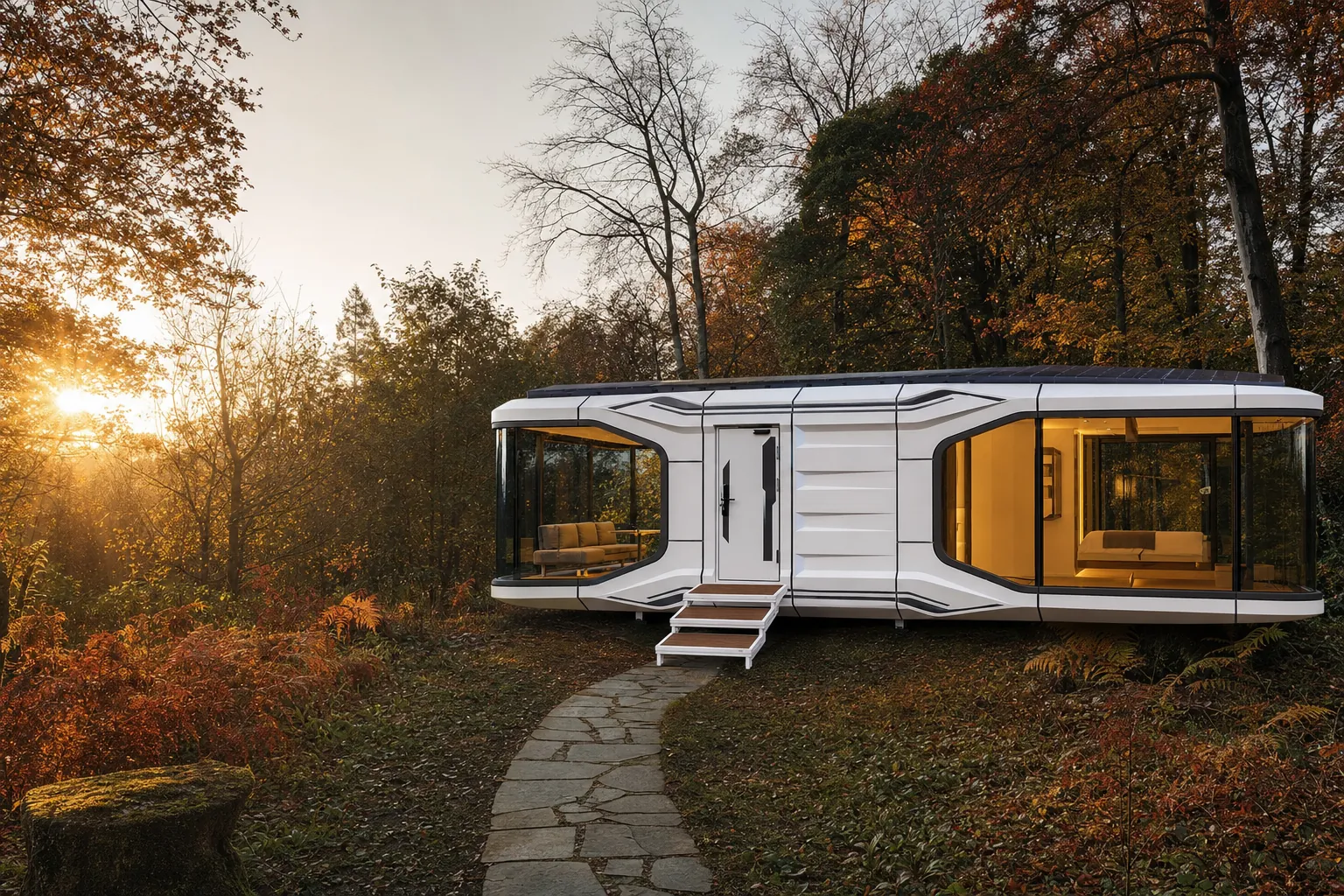

Council Tax on a Garden Annexe in the UK: A 2027 Guide
A self-contained pod in the garden can get its own council tax band. Here is when that happens, when the 50% annexe discount or a full exemption applies, and what to check with your council for 2027.
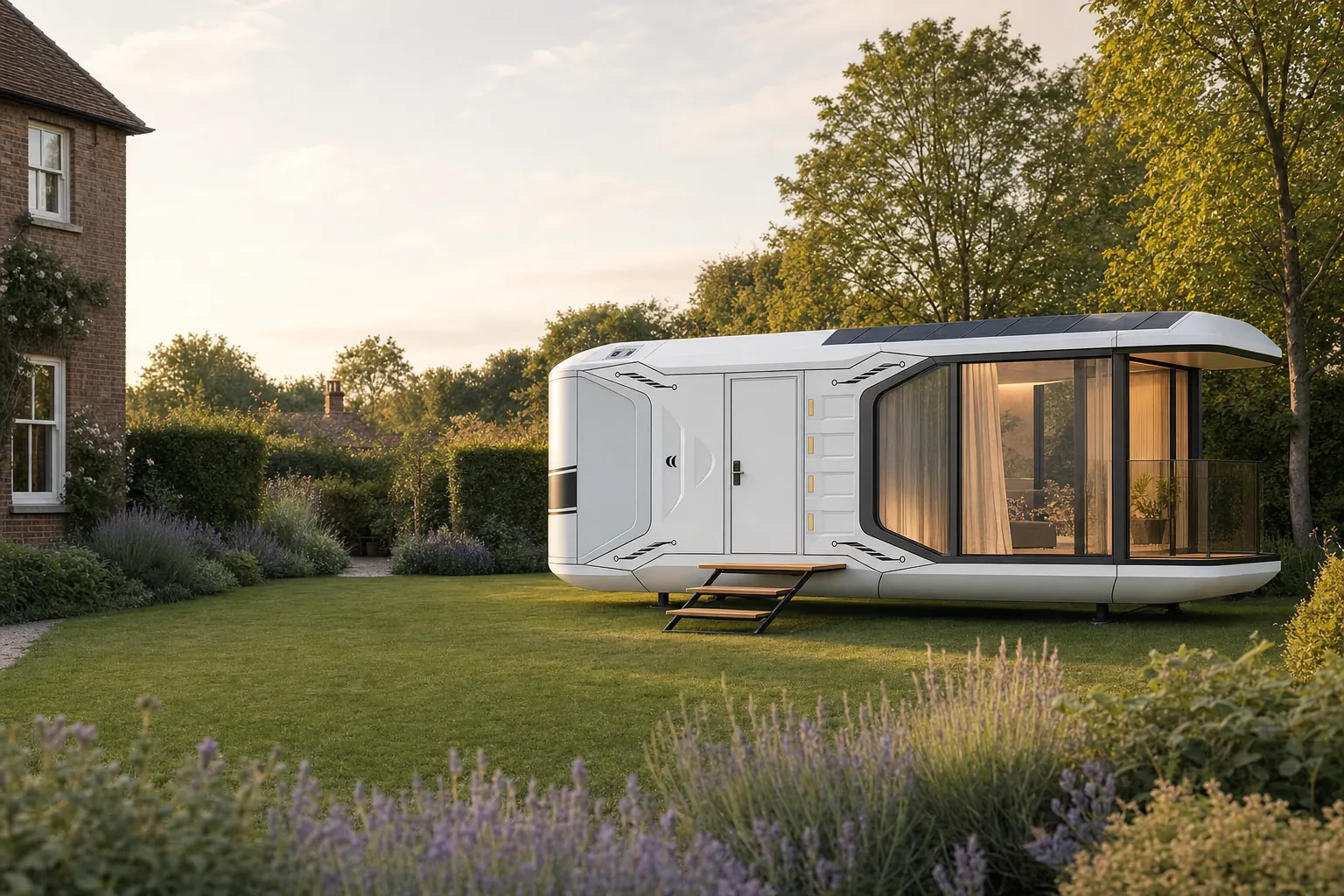
Council tax is the running cost most people forget when they plan a garden annexe. The pod itself has a clear price; the yearly bill depends on how the building is equipped, who lives in it and which part of the UK you are in. Here is how the system works, in plain English.
Does a garden annexe get its own council tax band?
It can. In England and Wales, the Valuation Office Agency (VOA) decides. Its guidance on GOV.UK says that any building, or part of a building, constructed or adapted for use as separate living accommodation must have its own band. The decision is made case by case, and the VOA looks at physical features such as:
- its own entrance, or access that does not run through someone else's living space;
- somewhere to sleep and somewhere to prepare food;
- washing facilities and a toilet.
Two points catch people out. First, only the physical features count, not how you happen to use the space, so an annexe that sits empty can still be banded. Second, the band is separate from planning: a pod can be lawful in planning terms and still be a dwelling for council tax, and the other way round. Our planning permission guide covers that side.
When a pod is not a separate dwelling
A garden office, studio, gym or hobby room without its own kitchen and bathroom is normally treated as part of the main house, not as a second home in the garden. It does not usually get a band of its own, although substantial improvements to a property can be reflected in the band of the main house at a later sale or revaluation.
The picture changes when the pod is fully self-contained. Most of our pods come with a fitted bathroom, and many layouts include a kitchen area, which is exactly why they work well as annexes. If you intend someone to live in it, plan your budget on the assumption that it may be banded.

The 50% annexe discount in England
A separate band does not automatically mean a full second bill. English councils apply a 50% reduction for annexes in two common situations:
- A relative lives there. The annexe is the main home of a relative of the person who pays council tax on the main house.
- You use it yourself. The annexe is used as part of your main home and is not let out separately.
Councils publish their own pages on this; Cornwall Council's annexe page is a clear example. Check the exact wording with your own council, because it handles the application and decides whether you qualify.
When an annexe can be exempt altogether
There are two exemptions worth knowing about, and both can reduce the annexe bill to nothing while the conditions are met.
- Dependent relative. The annexe is the sole or main home of a dependent relative of someone living in the main house. Councils generally treat a relative as dependent if they are aged 65 or over, severely mentally impaired, or substantially and permanently disabled.
- Empty and cannot be let separately. The annexe is unoccupied and planning restrictions mean it cannot be let apart from the main house.
For many families this is the heart of the matter. A pod for a parent in their late sixties or older may well fall under the dependent relative exemption. We explain the practical side of that project in our granny annexe guide.
Annexe council tax at a glance
| Situation (England) | What usually happens |
|---|---|
| Office or studio, no kitchen or bathroom | Normally no separate band |
| Self-contained, used as part of your own home | Own band, 50% reduction |
| Self-contained, a relative lives there | Own band, 50% reduction |
| Self-contained, a dependent relative lives there | Own band, exempt |
| Self-contained, empty, cannot be let separately | Own band, exempt |
| Rented to a tenant | Own band, full charge, usually paid by the tenant |
| Run as a holiday let | Council tax or business rates, depending on nights let |
This is a summary, not a ruling. Your council and the VOA make the actual decisions.
Letting the pod: tenants and holiday guests
Once a pod is let to someone outside the family, the annexe reliefs fall away. The VOA does not treat tenant-occupied accommodation as an annexe, and it keeps its own band.
Holiday lets follow different rules again. In England a self-catering property is assessed for business rates instead of council tax only if it was available to let for at least 140 nights in the last 12 months, was actually let for at least 70 nights, and will be available for at least 140 nights in the coming year. If it falls short, it stays on council tax. The thresholds in Wales are much higher, at 252 nights available and 182 nights let. The GOV.UK page on holiday lets sets out the current tests. If letting is your plan, our landowner's guide to glamping pods is a useful next read.

Scotland, Wales and Northern Ireland
Everything above about discounts and exemptions describes England. The rest of the UK needs a separate check:
- Wales shares the VOA and the banding approach, but discounts and premiums are set under Welsh rules, so ask your council what applies to annexes.
- Scotland has its own system. Bands are set by Scottish Assessors, not the VOA, and reliefs differ.
- Northern Ireland uses domestic rates instead of council tax.
What to do before you order
- Decide who will use the pod and whether it needs a kitchen and bathroom.
- Ask your council's council tax team how it would treat that use, and which discount or exemption you could claim.
- Remember that reliefs are not applied automatically. You have to apply, and tell the council when circumstances change.
- Build the likely bill into your running costs alongside the figures in our garden pod cost guide.
On our side the numbers are fixed in writing. Pods start at £39,750 for the 12.8 m² EcoNest, and the VitaPod at 28.0 m² is £50,250. Every pod includes the free solar package, free delivery in the UK and Ireland and a 3-year warranty; crane hire on delivery day is booked locally by you. The FAQ covers deposits and timelines.
Quick questions
Will a garden office pod increase my council tax?
A pod used as an office or studio, without its own kitchen and bathroom, is not normally banded separately. A fully self-contained pod can be.
Who decides whether my pod gets a band?
In England and Wales, the Valuation Office Agency. Your council then issues the bill and handles any discount or exemption.
Can I avoid a band by taking out the cooker?
Unlikely. The VOA's guidance says that removing a cooker or a sink, without more substantial alterations, is not expected to change its decision.
Get the pod price in writing
Council tax is for your council to confirm. The cost of the pod is ours, and we set it out clearly: price, options, delivery and timeline in one written quote, with no obligation. Get your quote and plan the rest with real numbers.
Find your pod
29 models, free solar package on every pod, 3-year warranty.
Explore the pods Request a quote