
Garden Office Pods in the UK: A 2027 Buyer's Guide
Working from home is no longer a stopgap for most people. If 2027 is the year you stop working at the kitchen table, here is how to choose a garden office pod that suits a UK garden, a UK council and a UK winter.
Why a pod rather than a spare room
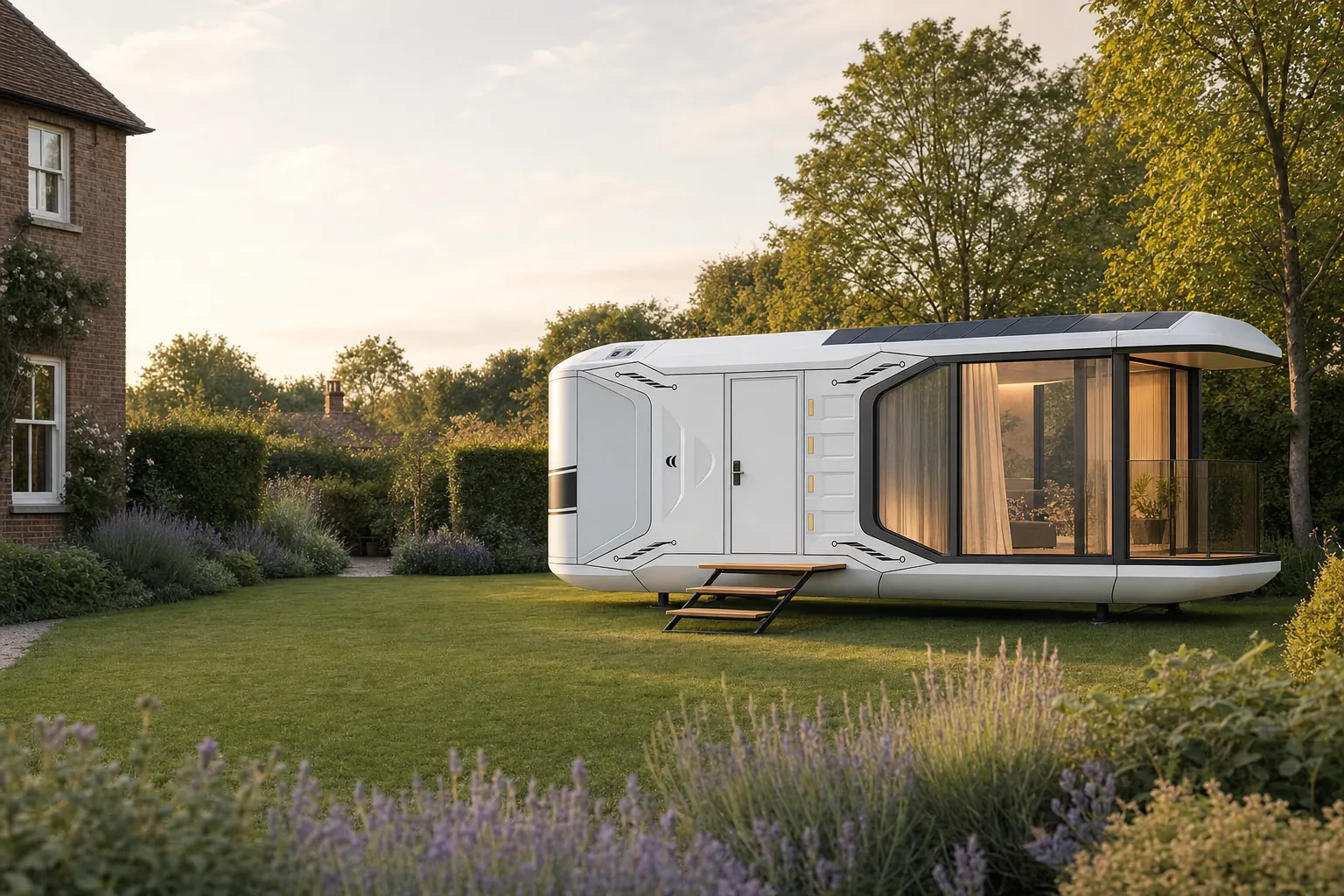
A garden office gives you a door to close and a short walk that separates work from home. A factory-built pod adds two things a site-built garden room usually cannot: it arrives finished, and the garden is only disrupted for the day it is lifted into place. You prepare a base, we deliver, and the pod is connected.
How big should a garden office be?
Size is the first decision, and it is easy to get wrong in both directions. As a rough guide:
- One person, one desk: around 12 to 18 m² is plenty. The EcoNest (12.8 m²) and the ApplePod (18 m²) sit here.
- Two desks or a meeting corner: 25 to 30 m² gives room to move. Look at the EcoLounge or the Eclipse.
- Office that doubles as a guest room: 29 m² and up, such as the Dream Box collection. Bear in mind that sleeping use changes the planning picture (see below).
Every model has its floor area and price published on its page, so you can compare them side by side on all pods.
Planning permission for a garden office in the UK
In England, a garden office used for work that is incidental to the house is often possible under permitted development for outbuildings, as long as it stays within the size and position limits. The headline limits are on height (lower when the building is within 2 metres of a boundary), on position (not in front of the house) and on how much of the garden it covers. The Planning Portal sets them out in full.
Three things change the answer:
- Clients or staff visiting. A business that brings people to your home may need permission.
- Someone sleeping there. That is no longer incidental use.
- Where you live. Conservation areas, listed buildings, National Parks and some estates have tighter rules, and Scotland, Wales and Northern Ireland have their own systems.
Our planning permission guide goes into more detail. When in doubt, ask your council before you order.
Power, internet and heating
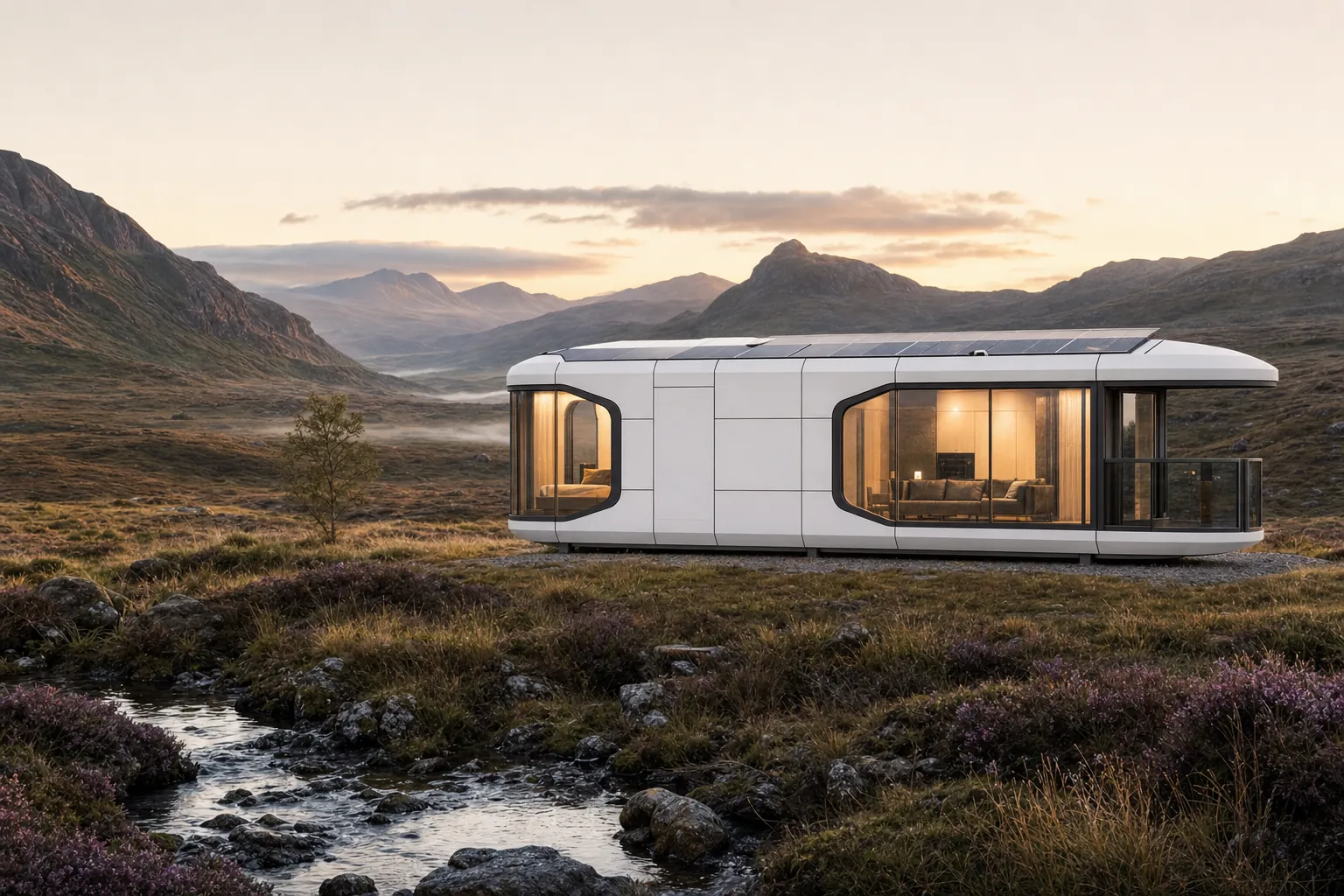
An office needs reliable power and a good connection. Most people run an armoured cable from the house, installed and signed off by a qualified electrician. For Wi-Fi, a mesh point or an outdoor access point usually does the job over a garden distance; a cabled connection is better still if the cable is going in anyway. If you would rather not dig a trench, our off-grid solar option is worth a look.
For a British winter, plan your heating early and ask us which options suit the model you like. A comfortable office in January is what makes a garden office worth having.
The base and delivery
A pod needs a level, solid base ready before it arrives: a concrete pad, a plinth or a ground-screw system, depending on your soil and the model. Then there is access. Pods are lifted into place, so the last step is yours: once the ship reaches port and customs has cleared, we give you the delivery date and you book a local crane for that day. Our delivery page explains the process.
A simple 2027 checklist
- Measure the space and note distances to every boundary.
- Decide on desk count and whether anyone will ever sleep there.
- Check permitted development, or speak to your council.
- Get an electrician's view on the cable run.
- Pick a base type and book the groundwork.
- Check crane access from the road to the base.
- Reserve your pod.
Find your pod
29 models, free solar package on every pod, 3-year warranty.
Explore the pods Request a quote