

Off-Grid Water and Sewage for a Pod in the UK: A 2027 Guide
Solar takes care of the power. Water in and waste out take a little more planning. Here is how off-grid water and sewage work for a pod in the UK, and which official rules to check first.

What "off-grid" really means for water and waste
Power is the easy part. Every pod we sell comes with a free solar package, and our guide to off-grid solar in a UK pod covers how that works. Water and waste are different, because they depend on your land, not on the pod.
A pod with a shower, basin and toilet needs three things on site:
- Clean water in: mains, a private source such as a borehole or spring, or stored water.
- Waste water out: a sewer connection, a septic tank, a small sewage treatment plant, or a waterless toilet with a plan for washing water.
- Somebody qualified to connect it: this is groundwork and plumbing done locally, on your site, before or after the pod is craned in.
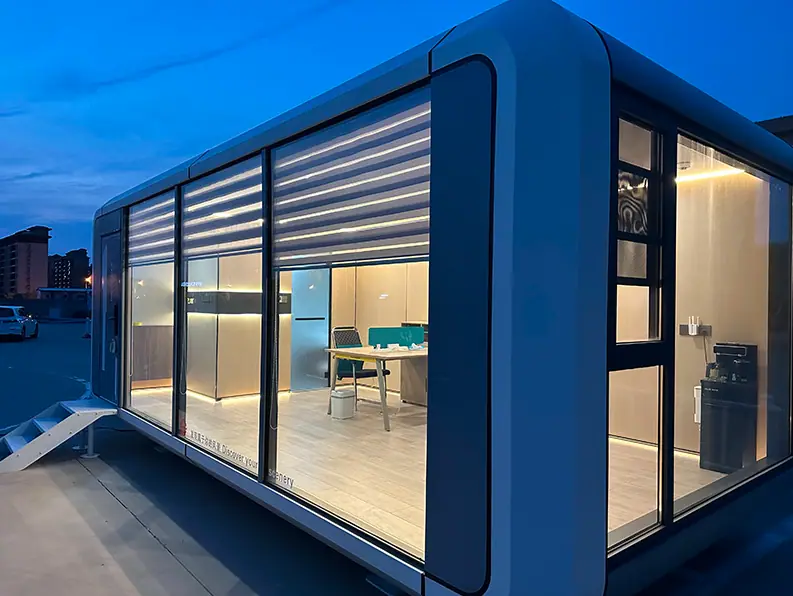
The pod arrives with its fixed fittings, such as the bathroom shown for that model. The supply and drainage it connects to are arranged by you with local trades, in the same way as the base and the crane.
Start with the simple question: is mains nearby?
Many "off-grid" plots are closer to services than their owners think. If the pod is going in a garden, the house already has water and drainage, and a local plumber or groundworker can often extend both. That is usually the cheapest and least complicated route, and it does not stop you running the pod's electricity from the sun.
It also matters legally. In England, the government's rules for small sewage discharges say you cannot rely on them if there is a public foul sewer within 30 metres of the boundary of the property the system serves. In plain terms: if a sewer is close, expect to be asked to connect to it. Your water company can tell you where the nearest sewer and water main run.
Off-grid water supply: your main options
| Option | How it works | Worth knowing |
|---|---|---|
| Borehole, well or spring | A private source on your land, pumped and filtered | Needs a survey and a specialist driller. Water for drinking should be tested and treated. |
| Rainwater harvesting | Roof water collected in a tank | Good for flushing and the garden. Drinking it needs proper filtration and disinfection. |
| Delivered or stored water | A tank you refill | Simple for occasional use. Less practical for a pod that is lived in or let every week. |
Two official points to check. First, the Environment Agency's guidance for England says you do not normally need an abstraction licence if you take 20 cubic metres (20,000 litres) or less a day from a single source, which is far more than one pod uses. See check if you need a licence to abstract water on GOV.UK. Second, a private drinking water supply is your responsibility to keep safe. The Drinking Water Inspectorate publishes guidance, and your council's environmental health team is the right first call, especially if guests will drink the water.
Sewage: septic tank or small treatment plant?
If there is no sewer to connect to, most rural sites use one of two systems.
- A septic tank settles the solids and sends the liquid to a drainage field, where it soaks into the ground through perforated pipes.
- A small sewage treatment plant (often called a package treatment plant) treats the waste to a higher standard, usually with a small electric pump or blower.
In England, both are covered by what the Environment Agency calls the general binding rules. The headline points from GOV.UK:
- A septic tank must not discharge to a river, stream or ditch. It has to go to ground through a drainage field.
- If you want to discharge to a watercourse, you must use a small sewage treatment plant.
- The rules cover discharges of up to 2 cubic metres a day to ground and up to 5 cubic metres a day to surface water. Above that, you need a permit.
- A new system needs building regulations approval, and may need planning permission.
The full detail is in septic tanks and sewage treatment plants: what you need to do. The person responsible is the "operator", which normally means the property owner.
Composting toilets and washing water
A waterless or composting toilet removes the biggest part of the problem and suits a pod that is used now and then: a studio, a weekend retreat, a quiet corner of a field. It needs regular emptying and somewhere sensible for the compost to finish.
It does not deal with water from the shower, basin and sink. That still has to go somewhere suitable, not into a ditch or stream. A local drainage engineer can tell you what your soil and your site will allow, and whether the council or the environmental regulator needs to be involved.
Scotland, Wales, Northern Ireland and Ireland
Everything above about the general binding rules is England only. GOV.UK is clear that Scotland, Wales and Northern Ireland have their own rules for septic tanks and treatment plants, and their own regulators: SEPA in Scotland, Natural Resources Wales, and the Northern Ireland Environment Agency. In Ireland, speak to your local authority. The principles are similar everywhere, but the paperwork is not, so check with the right body before any groundwork starts.
How to plan it around your pod order
Production takes 2 weeks after your deposit, and shipping and delivery typically take around 3 months after that. That window is your time to get the site ready. A sensible order:
- Before you order: ask your council about planning for the pod and its drainage together. Our planning permission guide explains the basics.
- Get a site visit from a drainage engineer. They will usually test how well the ground drains before recommending a system.
- Choose the pod to match the use. A compact model such as the 12.8 m² EcoNest (from £39,750) uses far less water than a family-sized pod like the 29.8 m² EcoPod (from £44,000). Browse the Eco Collection or all the pods.
- While the pod is at sea: have the base, water supply and drainage installed, ready for connection.
- Delivery day: once the ship has docked and cleared customs we give you the date, and you book a local crane. The steps are set out on how it works and delivery.
Frequently asked questions
Does the pod come with a water tank or septic tank?
No. The pod comes with its shell, glazing, fixed fittings, the free solar package and a 3-year warranty. Water supply and drainage are site works, arranged by you with local qualified trades. Our FAQ lists what is included.
Can I connect a pod to mains water later?
Yes. Pods can be connected to mains services by local qualified trades, so you can start off-grid and connect later if a supply becomes available.
Do I need permission for a septic tank?
In England a new septic tank or treatment plant needs building regulations approval and may need planning permission. Rules differ in Scotland, Wales, Northern Ireland and Ireland. Always confirm with your local council before work starts.
Tell us where the pod is going and how you plan to use it, and we will send a written quote by email with the price, options and timeline. Get your quote.
Find your pod
29 models, free solar package on every pod, 3-year warranty.
Explore the pods Request a quote